 MOQ 6
MOQ 6Denim
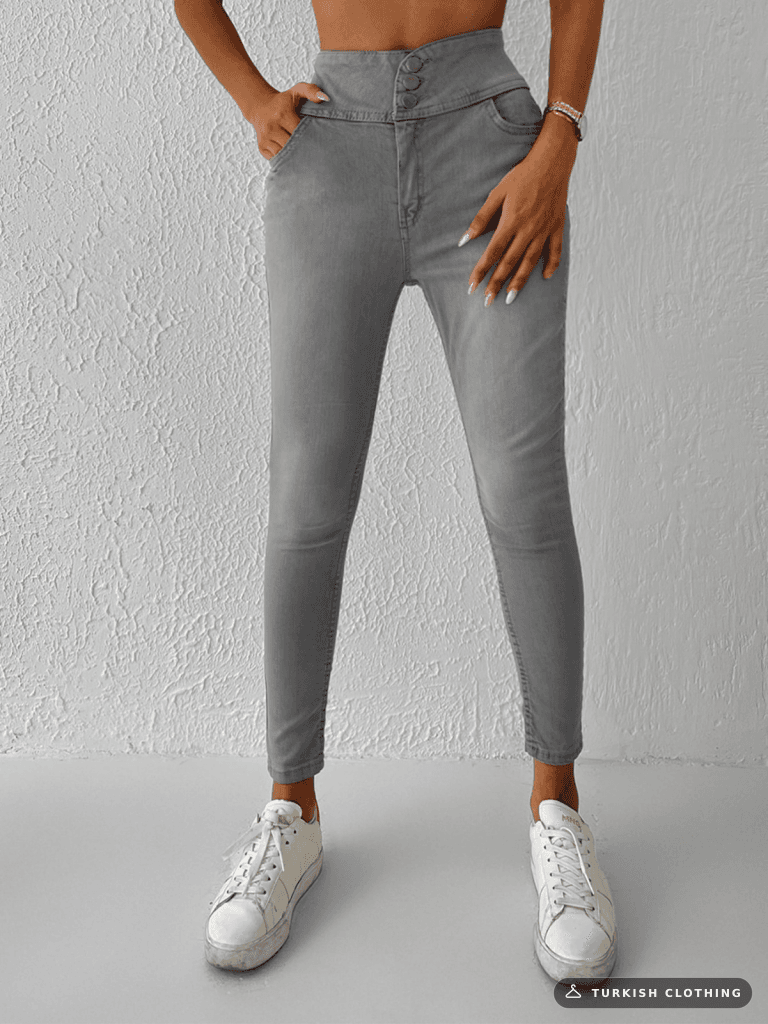
High Waist Lycra Jeans (Grey), 5404
Janes
Series 1S-1M-1L-1XL-12XL-13XL · 6 pcs#5001
Register to see price— free
36 wholesale products from verified Turkish manufacturers, with factory prices and minimums on every card.
36 products
MOQ 6Janes
Series 1S-1M-1L-1XL-12XL-13XL · 6 pcs#5001
Register to see price— free
 MOQ 6
MOQ 6Janes
Series 226-228-232 · 6 pcs#5001
Register to see price— free

 MOQ 6
MOQ 6Janes
Series 126-128-130-132-134-136 · 6 pcs#5001
Register to see price— free

 MOQ 6
MOQ 6Janes
Series 1S-1M-1L-1XL-12XL-13XL · 6 pcs#5001
Register to see price— free


Varetta
Register to see price— free


Varetta
Register to see price— free

Varetta
Register to see price— free

Varetta
Register to see price— free

Varetta
Register to see price— free

Varetta
Register to see price— free

Varetta
Register to see price— free

Varetta
Register to see price— free

MyJest
Series 2S-2M-1L · 5 pcs#MJF11937
Register to see price— free
Denim is one of the few garment groups where Türkiye controls the whole chain on home soil: mills weave the cloth, cut-and-sew plants build the garment, and industrial laundries finish it, often within the same province. For a buyer, that vertical setup shortens development loops — a wash correction travels across town instead of across an ocean.
The listings below span raw selvedge, rigid 100% cotton and stretch blends from 11 to 14 oz. Each card shows the fabric spec and the minimum per style, and laser or ozone finishing can be requested during quoting for brands that want lower-impact washes.
Türkiye is one of a small number of countries with a complete denim chain inside its borders: cotton spinning, weaving, garment making and — critically — industrial laundries, all within a few hours of each other. Mills such as Isko, Bossa and Çalık supply denim to international brands from here, which means a buyer working with a Turkish garment factory can often specify a fabric by name and have it woven locally rather than imported.
That integration is what makes the country competitive on this category specifically. Denim is unusual in that the garment is only half-finished when it leaves the sewing line; the laundry does the rest, and moving unfinished garments between countries for washing destroys both the schedule and the margin. Having weaving, sewing and laundry co-located removes that problem entirely.
The second consequence is technical depth. The Turkish denim industry has invested heavily in ozone, laser and low-water finishing, largely because European customers demanded it. If your buyer asks about water consumption or chemical use in the wash, this is a market where the question has a real answer rather than a shrug.
Denim is quoted in ounces per square yard, and that single number tells you most of what you need. Roughly speaking, anything under 10 oz is lightweight — summer jeans, shirts and dresses. The 11–13 oz band is the mainstream jeans territory where most commercial product sits. Above 14 oz you are into heavyweight and selvedge, a specialist market with its own customer and its own price.
The second decision is stretch. Rigid denim is pure cotton, moulds to the wearer over time and is what the enthusiast end of the market wants. Comfort stretch adds a small percentage of elastane for give without changing the look much. Power stretch, with higher elastane and often a recovery fibre, is what makes skinny and jegging fits possible at all. Each has a different recovery behaviour, and the complaint that jeans "go baggy at the knee" is nearly always a recovery problem specified at this stage.
Then the construction details: warp and weft counts, the weave itself — traditional three-by-one twill versus a broken or satin weave — and whether the yarn is ring-spun or open-end. Ring-spun gives the irregular, characterful surface that looks like proper denim; open-end is flatter, cheaper and perfectly serviceable in the value segment. State which you want, because the two look different from across a shop floor.
Two pairs of jeans cut from identical cloth on identical machines can differ in cost by a factor of three, and the difference is entirely in the wash. This is the part of denim buying that people new to the category consistently underestimate.
A rinse wash is barely more than a soften and set — cheap, fast, and the base of the raw and dark-wash market. Stone wash uses pumice or enzymes to abrade the surface, taking colour down and softening the hand. Bleach and vintage effects layer on chemical or mechanical processes to build the fades, whiskers and honeycombs that make a garment look worn. Each additional process is another handling of every single garment, which is why the price climbs so steeply.
Because the wash is applied per garment rather than per metre, minimums often sit at the laundry rather than the sewing floor. A factory happy to sew three hundred pieces may need a certain quantity per wash recipe to make the laundry run worthwhile. If you want four washes across a range, ask early what that does to the minimum — the answer often reshapes the range plan.
Denim finishing has historically been water and chemical intensive, and it is the part of the category under the most scrutiny from European buyers. Türkiye's laundries have adopted the current alternatives fairly widely, which makes it a practical place to buy if you need to say something credible about impact.
Laser finishing replaces hand sanding and much of the chemical fading with a computer-controlled beam that burns the pattern into the surface. It uses no water for that step and, usefully for you, makes the effect exactly repeatable between production runs — the reason it spread as fast commercially as it did environmentally. Ozone finishing replaces some bleaching with gas, cutting both water and chemical use. Neither is exotic; both are worth asking for by name.
A word on claims. "Sustainable" is not a defensible statement on a label. A specific, verifiable one is: laser finishing instead of manual sanding, a stated water reduction against a named baseline, or certified recycled cotton content backed by a transaction certificate for your lot. Ask the laundry what they can document, and only claim that.
Jeans are the least forgiving garment to grade. The block does more work here than in any other category, and factories that make denim well guard their blocks accordingly. If you have a fit that sells, supply the pattern; if you do not, ask to buy against the factory's proven block rather than inventing one on a first order.
Specify rise, thigh, knee and leg opening explicitly — those four measurements define the silhouette far more than the waist does. State them at a named size and let the factory grade out. And decide the leg opening with the wash in mind, because abrasion processes take a little off every dimension.
Hardware is the last piece and it is more visible than its cost suggests. Buttons, rivets, zips and the leather or synthetic patch all carry branding, and they are also the parts that fail. Specify the finish — antique brass, nickel, matte black — and ask for hardware to be nickel-tested if you are selling into the EU, where nickel release from items in prolonged skin contact is regulated.
Denim has one more approval stage than other categories and skipping it is the classic mistake. You are approving three things, not one: the fabric, the fit, and the wash — and the wash must be approved on the actual garment, because the same recipe reads differently on a different cloth.
The sequence that works is: agree the fabric quality and get a swatch; approve the fit in an unwashed sample so you are judging the pattern rather than the finish; then approve a washed sample of that same garment and treat it as the standard for production. Keep that approved piece. When bulk arrives, the argument about whether the shade matches is settled by comparing against a physical garment rather than by memory or a phone photograph.
Build the wash approval into your timeline, because it is a real week. Then place the first order small, keep budget for the repeat, and use the reorder speed that having the whole chain in one country actually buys you.