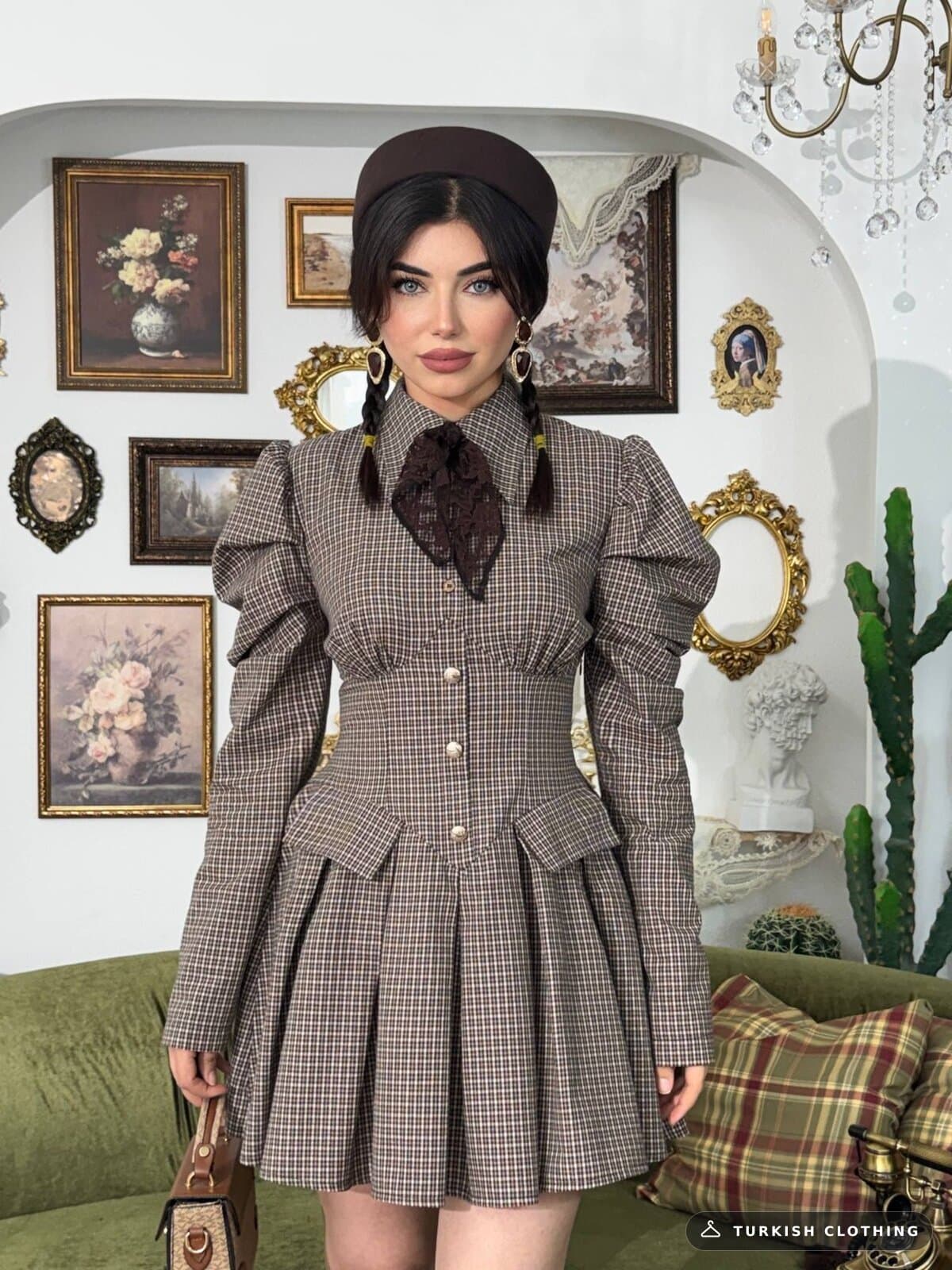
Turkish Knitwear Manufacturers
9 wholesale products from verified Turkish manufacturers, with factory prices and minimums on every card.
9 products
 MOQ 6
MOQ 6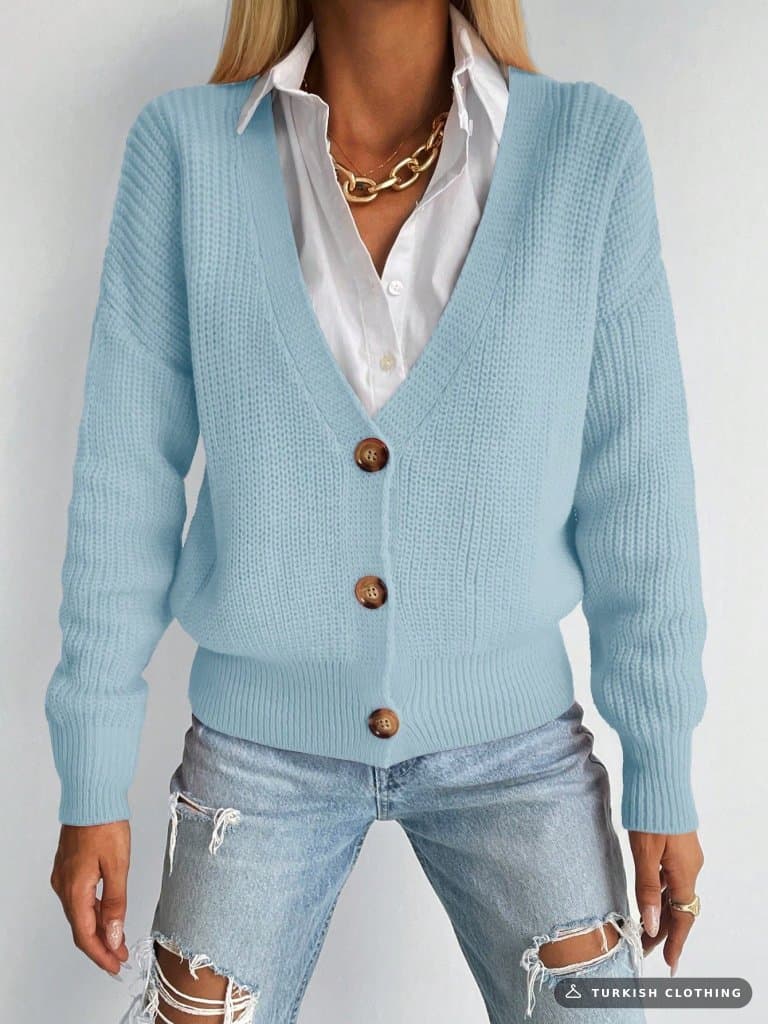 MOQ 6
MOQ 6 MOQ 6
MOQ 6Knitwear
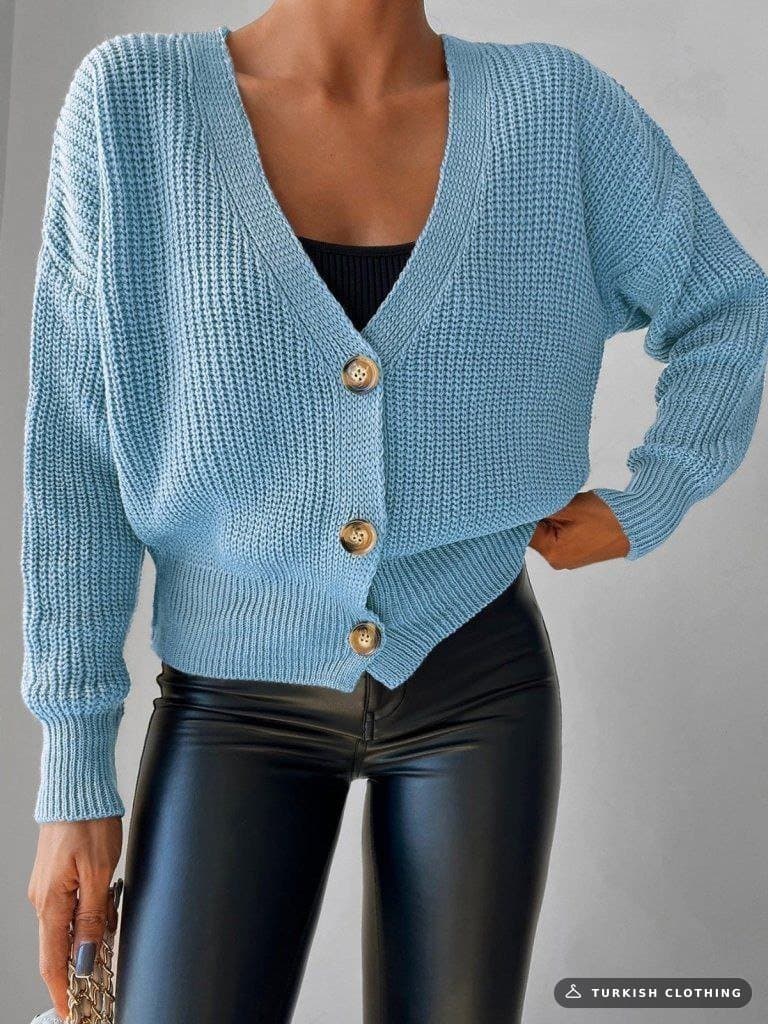
Women's Mini Knitwear Pareo, 24068 — Mink — Beige
Janes
Series 1XS-1M · 2 pcs#55153
Register to see price— free
 MOQ 6
MOQ 6Knitwear
Women's Long-Sleeve V-Neck Knitted Sweater with Sleeve Cutouts and Diamond — Beige
Janes
#63187
Register to see price— free
 MOQ 6
MOQ 6Knitwear
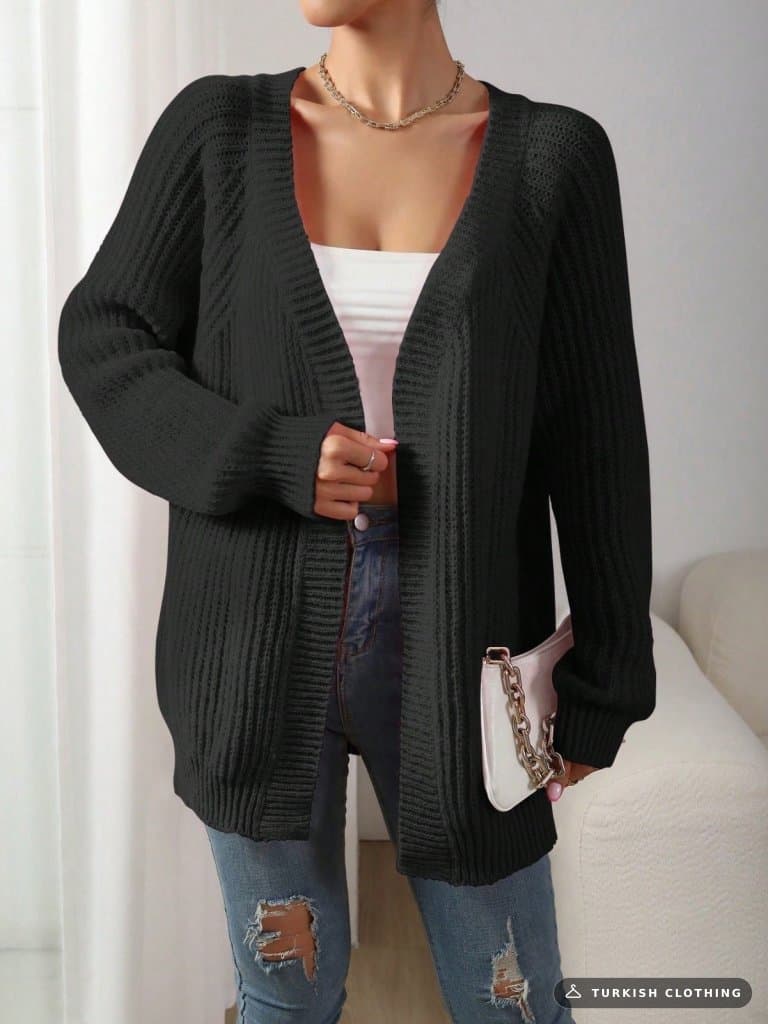
Women's Long Sleeve V-Neck Perforated Diamond Pattern Detailed Knitwear Sweater — Black
Janes
#63187
Register to see price— free


Sourcing knitwear from Türkiye
Sweater production is a machine-time business: a factory's gauge range decides what it can knit, and its booked capacity decides when. The knitters listed here run flat-bed machines from chunky 3gg through fine 12gg, covering everything from cable crewnecks to lightweight merino layers, and most publish their machine park on the profile so you can match a design before asking for a price.
Yarn is the other half of the equation. Factories with standing yarn agreements can start a sample the week you approve it, while unusual fibers add procurement time — flag any specialty yarn early in the quote so lead times stay honest.
Three ways to make a sweater, and why the price gap is so wide
Quotes for what looks like the same jumper can differ by a factor of three, and the explanation is almost always the construction method rather than the yarn. Fully-fashioned knitting produces each panel to shape on a flat-bed machine, adding and dropping needles so the edges follow the pattern. Nothing is cut, so nothing is wasted, and the shoulder line follows the body. It is the method behind every sweater that looks expensive, and it is what most people mean when they talk about Turkish knitwear manufacturers at the quality end.
Cut-and-sew is the opposite approach: knit a length of plain fabric, cut the panels out of it like woven cloth, and overlock them together. It is fast, it uses commodity machines, and it wastes fifteen to twenty-five per cent of the yarn in the offcuts. For a loose sweatshirt-shaped piece nobody notices. On a fitted crew neck the difference is immediately visible at the armhole, where a cut edge cannot follow the curve the way a fashioned one does.
Integral or seamless knitting sits above both, producing a whole garment on one machine with no assembly at all. Machine time per piece is long and the programming is specialised, so unit economics only work at either very high value or very high volume. In practice most commercial ranges should be fully-fashioned at the top, cut-and-sew at the entry price, and consciously so rather than by accident.
- Fully-fashioned
- Panels knitted to shape, then linked. No yarn waste, clean armholes, and the construction buyers associate with quality.
- Cut-and-sew
- Knitted yardage cut like cloth. Cheapest and fastest, with 15–25% yarn waste and visible compromise on fitted shapes.
- Linking vs overlocking
- Linking joins loop to loop for a flat, invisible seam. Overlocking leaves a ridge that a wearer feels at the shoulder.
- Wholesale t-shirts from Turkey — the circular-knit trade, a different industry entirely
- Wholesale outerwear — the layer that goes over the sweater
Gauge and yarn count: the two numbers that define the garment
Gauge is the number of needles per inch on the machine, and it determines how fine the knit is. A 3 or 5 gauge produces chunky, visibly hand-knit-looking pieces; 7 gauge is the middle ground; 12 and 14 gauge give the fine, smooth surface of a classic merino crew neck. Machines are built for a gauge range and cannot be freely reset, so gauge decides which factories can even bid for your order. Naming it in the first email saves a week of unusable quotes.
Yarn is described by count and by ply. Count is a fineness measure — in the metric system used across the Turkish trade, higher numbers mean finer yarn. Ply is how many of those strands are twisted together. A 2/28 merino and a 2/48 merino knit into completely different garments even at identical gauge, so the pairing of gauge and count is what actually specifies the fabric.
Fibre then sets both price and behaviour. Acrylic is inexpensive, colour-stable and does not shrink, but it pills and it does not breathe. Cotton knits cleanly and suits transitional seasons but has no elastic recovery, so cuffs go slack. Merino is the commercial sweet spot for quality knitwear: warm, fine, breathable, and machine-washable when treated. Mohair, alpaca and cashmere are almost always used as a percentage in a blend, and the percentage is where suppliers cut cost quietly. Five per cent cashmere in an acrylic base is legally cashmere content and functionally acrylic.
- Gauge
- Needles per inch. 3–5 chunky, 7 mid, 12–14 fine. It decides which machines — and therefore which factories — can make the piece.
- Yarn count and ply
- Metric count with ply, e.g. 2/28. Fineness plus strand number. Gauge without count only half-specifies the fabric.
- Merino
- Fine wool, warm and breathable, machine-washable when superwash-treated. The default for quality commercial knitwear.
- Luxury blends
- State the exact percentage. A single-digit cashmere share is legally declarable and makes almost no difference to the hand.
Pilling, shrinkage and the tests that predict returns
Two failure modes generate nearly every knitwear complaint, and both are measurable before you place the order. Pilling is short fibres migrating to the surface and balling up; it is worst in loosely-twisted yarns and in acrylic, and it is graded on a five-point scale after a standardised abrasion test. Grade 4 or better after the test is a reasonable commercial threshold. A supplier who cannot produce a pilling grade has never tested the yarn, which tells you something on its own.
Shrinkage in knitwear is not the mild dimensional change woven cloth shows. Untreated wool felts — the scales on the fibre interlock permanently under heat and agitation — and a felted sweater is unwearable, not merely smaller. Superwash treatment removes or coats those scales and makes machine washing safe. If you are selling wool knitwear to a market that will not hand-wash, superwash is not an upgrade, it is a requirement.
The third thing to check is recovery at the ribs. Cuffs, hem and neckband carry the elastic work, and a rib knitted too loosely goes slack within a month of wear. Stretch the cuff of your sample to twice its width, hold for ten seconds and let go. If it does not come back, ask for more elastane in the rib or a tighter rib gauge. That ten-second test predicts more returns than any paperwork.
- Pilling grade
- Five-point scale after standardised abrasion. Hold out for grade 4+. Loose-twist and acrylic yarns score worst.
- Superwash
- Scale treatment that makes wool machine-washable. Without it, one hot wash felts the garment permanently.
- Rib recovery
- Stretch the cuff to double and release. No return means slack cuffs within weeks and complaints within a season.
Minimums, dye lots and a calendar set by the yarn, not the factory
The binding constraint in knitwear is the dyehouse, not the knitting floor. Yarn is dyed in lots, typically a few hundred kilograms per colour, and a lot converts to somewhere between five hundred and a thousand sweaters depending on gauge and weight. Below that you are buying from stock-dyed yarn in the colours the spinner already holds. Factory minimums of 100 to 200 pieces per colour are common and genuinely negotiable; the dye lot is not.
Dye lots create a second, subtler problem. Two lots of the same colour reference will differ slightly, and on a large flat area like a sweater body the difference is visible when two garments hang side by side. Order all of one colour in one lot, and if you plan a repeat, reserve the yarn rather than assuming the colour will match later. This is the most common quality dispute in the category and it is entirely preventable at the ordering stage.
The calendar follows from the yarn. Spinners take orders for autumn yarn in late winter and dye through spring. A factory approached in August for a November delivery is working from what remains, which restricts colour, raises price and compresses the sampling time you need for a category where fit is knitted in rather than sewn. February to April is the window that gets you the full colour card at a sane price.
- Dye lot
- A few hundred kilos per colour — roughly 500–1,000 sweaters. The real minimum, and it belongs to the dyehouse.
- Lot matching
- Never split one colour across two lots. The shade difference is invisible alone and obvious on a shop rail.
- Stock-dyed yarn
- The spinner's standing colours, available immediately. Removes the dye-lot minimum at the cost of colour freedom.
- Ordering window
- February–April for the same autumn. Late enquiries get residual yarn, restricted shades and no sampling room.
- MOQ explained — why the yarn minimum outranks the factory minimum
- Lead time — what to expect from confirmation to shipment
Approving knitwear: swatch, wash, size set
Start with a knitted swatch rather than a yarn cone. The yarn tells you fibre and count; the swatch tells you what the fabric does at your gauge with your stitch structure, which is the thing you are actually buying. Ask for it in the final colour and at the production tension, and keep it — a retained swatch settles arguments that a photograph cannot.
Wash the swatch to the care label you intend to print, then measure it. Anything over three per cent dimensional change needs the pattern adjusted before knitting, and knitting is programmed per size, so a late change is not a small correction. Rub the washed swatch against itself and grade the pilling yourself; the difference between a laboratory grade and what you see with your own eyes on the real colour is worth the five minutes.
Then request a size set, because knitwear grading is unusual. Panels are knitted to shape, so grading changes the machine program rather than a paper pattern, and errors show up as proportion problems — a sleeve that is right in medium and too narrow in extra large — rather than as simple measurement misses. Three sizes on a table, measured against the chart, catches it before the yarn is committed.
- Size set — the approval step knitwear needs most
- Pre-production sample — sign-off in the production yarn and colour
- Request knitwear quotes — gauge, yarn count and colour count in one brief
- Browse verified suppliers — flat-bed knitters with published capabilities
Knitwear: common sourcing questions
- Which gauges and yarns are commonly available?
- 3gg, 5gg, 7gg and 12gg are standard across the network, with acrylic-wool blends, cotton and extrafine merino as the usual menu. Cashmere blends are possible on request with longer procurement.
- Do knitwear factories keep yarn in stock?
- Core blends in staple colors are often held in-house, letting sampling begin immediately. Dyed-to-order shades add roughly two to three weeks for yarn dyeing.
- What is a knitdown and do I need one?
- A knitdown is a small stitch swatch produced before a full sample to confirm tension, weight and pattern. It costs little, saves a whole sampling round, and is worth requesting for any new stitch.