

Wholesale Trousers from Turkey
152 wholesale products from verified Turkish manufacturers, with factory prices and minimums on every card.
Browse by style
152 products


Trousers
Varetta Men's Smoked Polyviscon Fabric Trousers — Smoke Gray
Varetta
Register to see price— free


Trousers
Varetta Men's Black Linen Trousers Dobby Classic Cut Cotton Pocket
Varetta
Register to see price— free


Trousers
Varetta Men's Smoked Classic Cut Dobby Linen Trousers — Smoke Gray
Varetta
Register to see price— free

Trousers
Varetta Men's Camel Color Classic Cut Dobby Linen Trousers
Varetta
Register to see price— free


Trousers
Varetta Men's Mustard Color Linen Trousers Classic Cut Dark
Varetta
Register to see price— free


Trousers
Varetta Men's Navy Blue Slim Fit Cut Polyviscon Fabric Trousers
Varetta
Register to see price— free

Trousers
Varetta Men's Black Slim Fit Cut Polyviscon Fabric Trousers
Varetta
Register to see price— free
Trousers
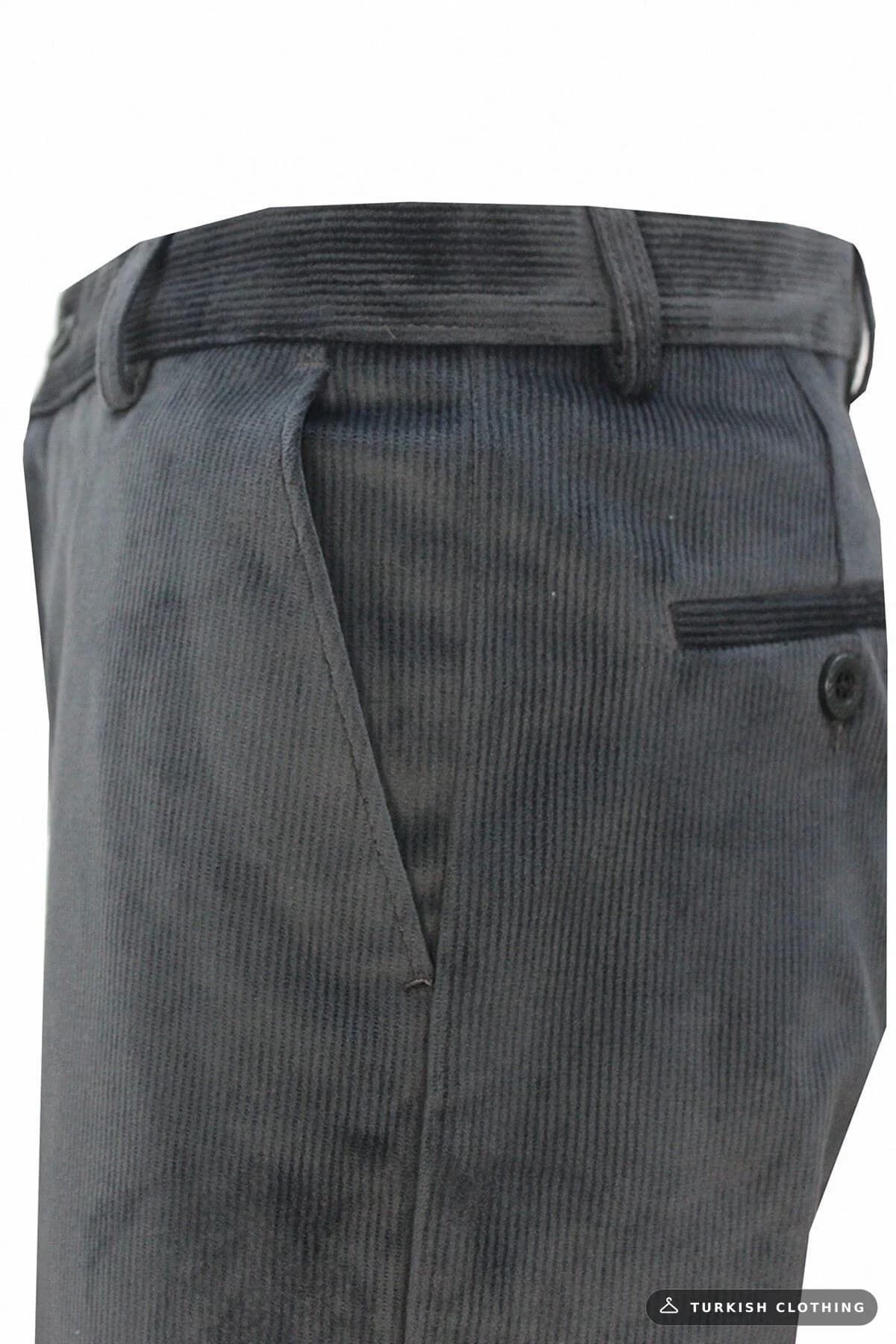
Varetta Men's Smoked Winter Thin Ribbed Pocket Classic Cut Velvet Trousers — Smoke Gray
Varetta

Register to see price— free
Trousers
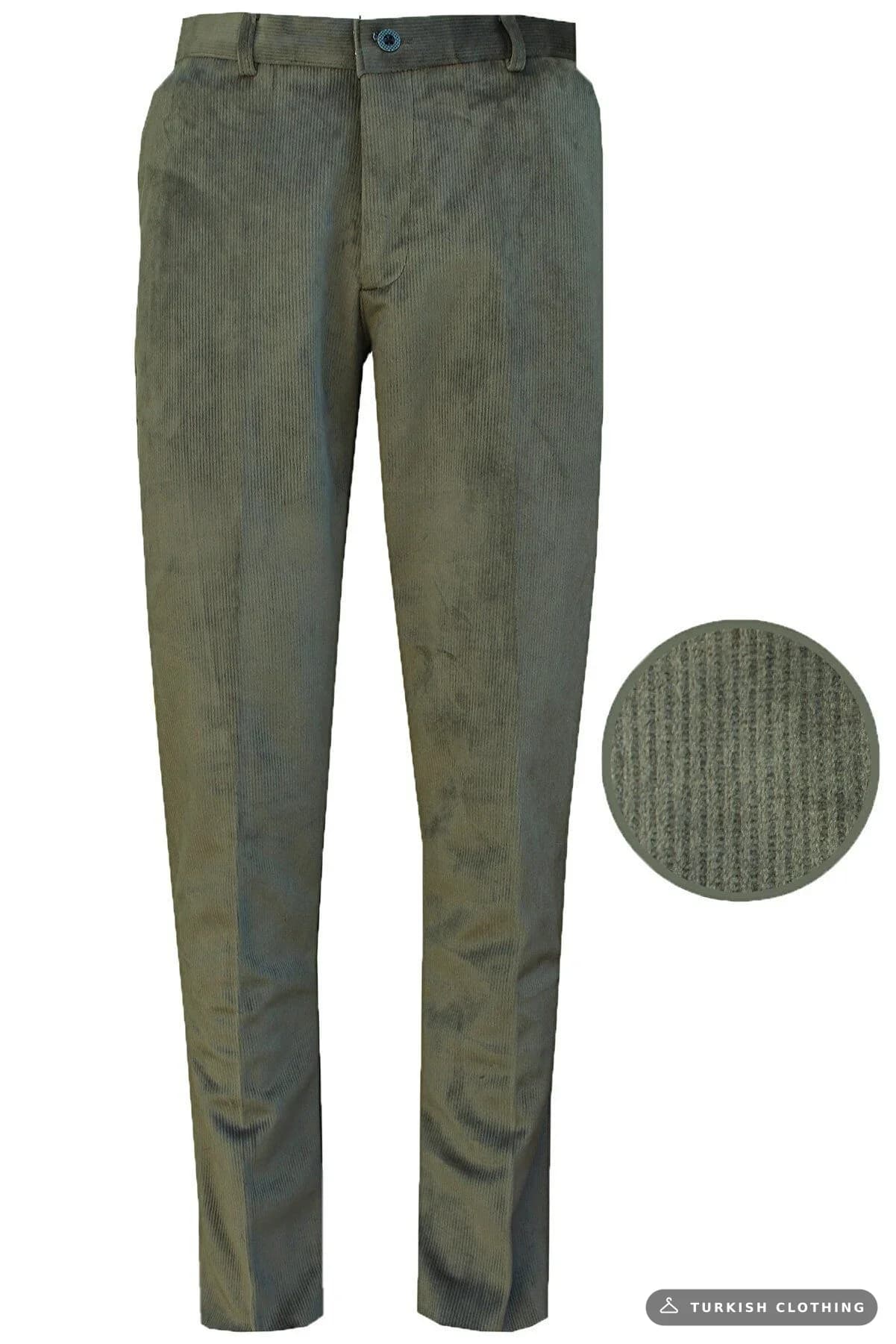
Varetta Men's Green Velvet Trousers Winter Striped Pocket Classic Cut
Varetta
Register to see price— free
Trousers
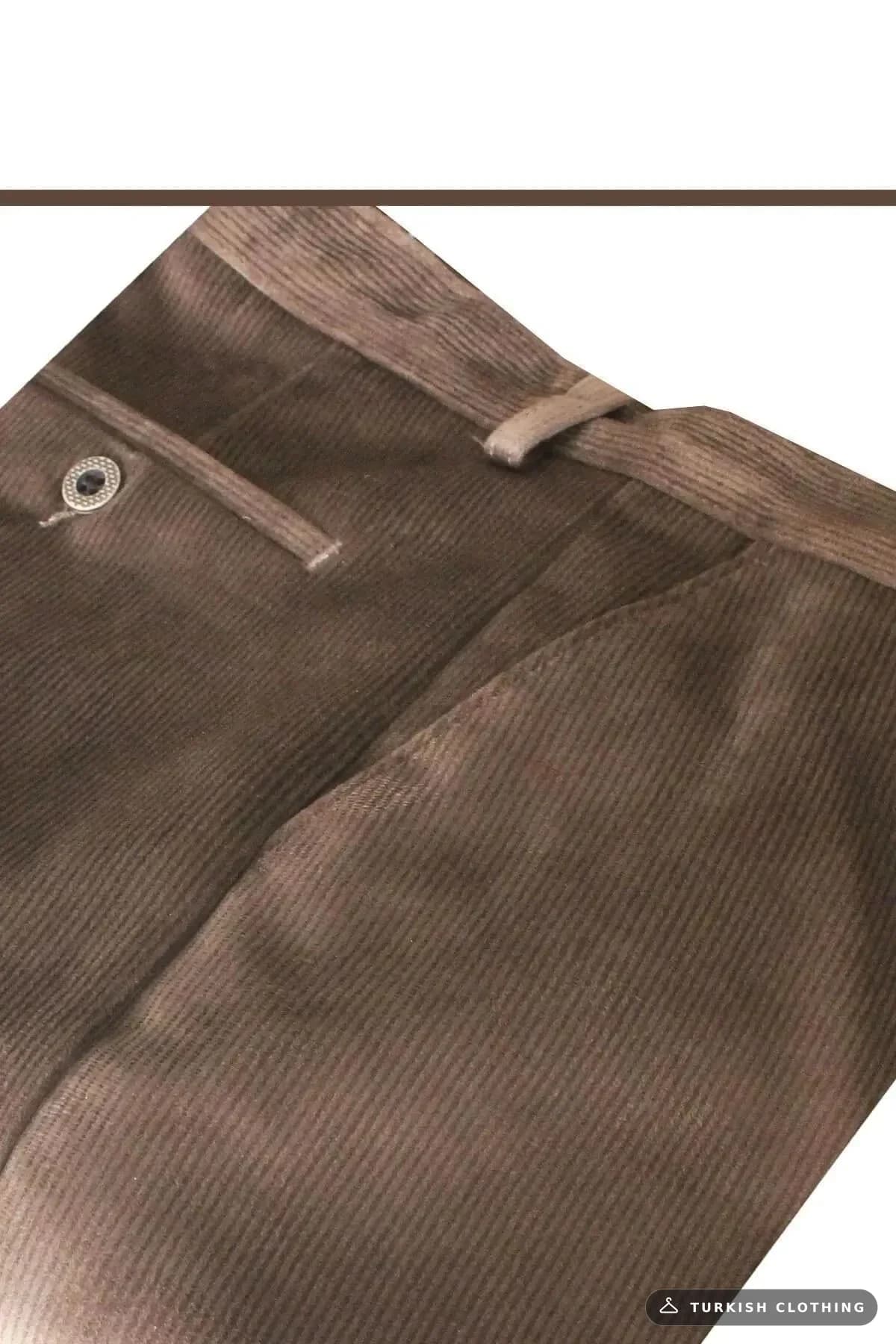
Varetta Men's Brown Winter Classic Cut Velvet Trousers with Wool Fleece Inside
Varetta
Register to see price— free

Trousers
Varetta Men's Black Winter Classic Cut Velvet Trousers with Wool Fleece Inside
Varetta
Register to see price— free
Sourcing trousers from Türkiye
Trousers are a pattern-room product: the block that shapes the waistband, the rise and the crease line gets reused across an entire program, so a factory with a proven trouser block delivers consistent fits from the first carton to the tenth reorder. The workshops in this catalog sew classic-cut chinos and pleated dress pants alongside relaxed drawstring styles, and their cloth rarely travels far — Denizli looms supply the linen and cotton twills for the summer range, while Bursa's weaving houses provide the velvet and velour that carry the autumn price points.
Minimums typically run from 100 to 300 pieces per style, with the size curve split across waist measurements rather than generic S-M-L, so state your market's waist distribution in the RFQ. Listings below show the fabric composition and minimum on every card; unhemmed lengths for tailoring programs and belt-loop or side-adjuster variations are quoted as options on the same base garment.
Four trouser trades, and why the difference matters to your quote
Trousers look like one product and behave like four. Tailored trousers are a pressing trade, built on fusible interlinings and shaped by heat. Chinos and casual cottons are a straightforward woven assembly. Linen and viscose summer trousers are a handling problem, because the cloth moves under the needle. Joggers and knit-based trousers are made in a knitwear factory entirely. A workshop that is excellent at one of these is frequently mediocre at another, and the quote you receive will tell you which one you are talking to long before the sample does.
The geography follows the same split. Tailored production sits alongside suiting, largely in Istanbul and in the older workshops of Bursa where wool finishing has been done for generations. Casual cottons are spread far wider and are the easiest to source at short notice. Knit trousers come from the same circular-knitting base that supplies tees and sweatshirts, mostly around İzmir and Denizli.
The commercially useful consequence: ask what the factory made last month, not what it can make. A workshop that has been running chinos all season has its blocks, its operators and its cloth relationships pointed in one direction, and moving it to a pressed wool trouser costs you the learning curve in your own first order.
- Tailored
- Wool and gabardine, fused waistband, heavy pressing. Highest skill, longest lead time, most visible difference between good and bad.
- Chino and casual
- Cotton twill, topstitched construction, straightforward assembly. Widest supplier base and the quickest to reorder.
- Summer wovens
- Linen, viscose and blends. Cheap cloth, expensive labour — slippery fabric slows every operation and punishes weak workshops.
- Knit trousers
- Joggers, ponte and scuba styles. Made in knitwear factories, quoted on knitwear economics, lowest minimums of the four.
- Linen trousers — the summer sub-category with its own sourcing rules
- Velvet trousers — festive-season production with an earlier cut-off
Reading the cloth: weight, weave and the stretch question
Fabric weight for trousers is quoted in grams per square metre or, in the wool trade, in grams per linear metre — check which before you compare. A summer trouser runs around 180–220 gsm, a year-round chino 240–300, a winter wool trouser 300–380. Going lighter than the season expects is the most common way a range fails: a 190 gsm trouser sold as autumn stock generates returns for transparency and for creasing at the seat.
Weave changes behaviour more than composition does. Gabardine is a steep twill that presses to a sharp crease and resists bagging at the knee, which is why tailored trousers default to it. Plain-weave poplin and canvas hold a flatter, more casual look. Dobby weaves add subtle texture that photographs well and hides light creasing — useful for travel-oriented ranges. Ask for the weave name, not just the fibre.
Elastane is the decision that most changes fit and lifespan. Two per cent adds comfort without changing the drape and is close to a default in womenswear. Above roughly four per cent the trouser starts to behave like a legging, seat and knee bagging become likely, and pressing a crease into it stops working. Elastane also complicates hemming and any later alteration, which matters if you sell through stores that offer tailoring.
- Gabardine
- Steep twill, dense and crease-holding. The default for anything that needs to look pressed at the end of the day.
- Cotton twill
- The chino cloth. 240–300 gsm covers most of the year, takes garment dye well, and reorders easily from stock.
- Elastane level
- 2% for comfort with no drape change. 4%+ behaves like a knit — comfortable, but it bags and it will not hold a crease.
- Linen blends
- Linen-viscose and linen-cotton crease far less than pure linen while keeping the handle. Usually the better commercial choice.
Rise, block and grading — where trouser orders go wrong
More trouser returns come from rise than from waist. Rise is the distance from crotch seam to waistband, and it silently defines whether a garment reads as contemporary or dated. A high-rise womens trouser and a mid-rise version of the same style are different products to the customer even though the size label is identical. Put front rise and back rise in the measurement chart in centimetres for every size, and check them on the sample yourself.
The factory's block is its house pattern, and every factory has one. Working with the block gets you a faster, cheaper, better-fitting sample because the operators know it. Fighting it — insisting on your own pattern with no size set — usually costs two extra sample rounds. Send your own graded pattern if you have one that works; otherwise start from theirs and adjust, and treat the first sample as a conversation rather than a verdict.
Grading deserves explicit instruction. A trouser graded only at the waist while the thigh and the knee stay static will fit the middle size and fail at both ends of the run. Ask which points are graded and by how much. Waistband construction is the related decision: a curved waistband follows the body and is now standard in womenswear, while a straight waistband is simpler and cheaper but gapes at the back on most figures.
- Rise
- Front and back, in centimetres, per size. The single measurement that most determines whether the trouser looks current.
- Factory block
- The house pattern. Starting from it saves at least one sample round and usually produces a better first fit.
- Grade points
- Waist, hip, thigh, knee and inseam should all move. A waist-only grade fits one size and fails the rest of the run.
- Waistband shape
- Curved follows the body and prevents back gape; straight is cheaper and works better on straight-cut menswear.
- Grading explained — how one sample becomes a full size run
- Size set — the approval step that catches grading errors
- Size conversion tool — EU, UK and US equivalents for your label
Construction and finishing details worth naming in the tech pack
The inside of a trouser tells you what you bought. A waistband curtain — the finished strip that lines the inside of the waistband — is standard on tailored product and absent on cheap product, and it is the difference between a waistband that stays flat and one that rolls after three washes. French seams or bound edges at the seat mean the workshop expects the garment to be worn hard. Overlocked raw edges everywhere mean the opposite.
Pocket bags are quietly important. Cotton pocketing outlasts polyester and does not pill against the leg, but it shrinks slightly, so it must be pre-shrunk or the pocket will pull the front of the trouser out of shape after the first wash. A pocket bag that is too shallow is the most common complaint in menswear and costs almost nothing to fix at specification stage.
Decide the hem policy before production, not after. Leaving trousers unhemmed with a generous turn-up serves stores that offer alterations and gives you one less size variable to manage. Hemming in the factory looks more finished on a hanger and suits ecommerce, where nobody is going to a tailor. Both are legitimate; what fails is deciding late and discovering that the cut length assumed the other choice.
- Waistband curtain
- Finished inner strip. Keeps the waistband flat over time and reads immediately as a better-made garment.
- Pocket bag
- Pre-shrunk cotton beats polyester for durability and comfort. Specify depth in centimetres or you will get the shortest one.
- Bartacks
- At pocket corners, fly base and belt loops. Their absence is the most reliable early sign of a cost-cut sample.
Minimums, stock cloth and how to start smaller than the quote suggests
Two different minimums apply and confusing them wastes weeks. The mill minimum is how much cloth a weaver will produce in one colour, typically 500 to 1,000 metres, which converts to roughly 350 to 700 trousers. The factory minimum is how many garments the workshop will cut, commonly 100 to 300 per colour. Only the first is genuinely inflexible.
The route around it is stock cloth. Turkish converters hold gabardine, chino twill and linen blends in a standing colour range, and buying from that stock drops the entry point to the factory minimum alone. The trade-off is that you take the colours the converter carries. For a first order, a slightly compromised navy that ships in five weeks is worth more than a perfect navy that requires seven hundred units and a mill booking.
One economy is specific to this category and worth exploiting. Trousers share cloth across styles far more readily than tops do, so a single fabric order covering a straight leg, a wide leg and a cropped version reaches the mill minimum across three products while each individual style stays small. Buyers who plan the range around the cloth rather than the cloth around the range routinely halve their entry cost.
- Mill minimum
- 500–1,000 m per colour. Real, and not negotiable — it is set by how a loom is warped, not by the sales team.
- Factory minimum
- 100–300 garments per colour. Negotiable, especially if you are repeating a style the workshop has run before.
- Stock cloth
- Converter-held colours available immediately. Removes the mill minimum entirely at the cost of colour choice.
- Shared cloth
- One fabric across three silhouettes hits the mill minimum while every style stays commercially small.
- MOQ explained — why the number differs at mill and factory
- Wholesale price guide — typical quote ranges before freight and duty
A trouser approval sequence that catches problems while they are cheap
Approve cloth first and separately. Ask for a metre, not a swatch, and wash it the way your customer will. Measure it before and after: anything shrinking more than three per cent lengthwise needs a cut allowance the factory has to know about before it lays the marker. Rub it against itself twenty times and look for pilling; twenty seconds now saves a season of complaints on a dark colour.
Then approve fit on a person in your middle size, seated as well as standing. A trouser that fits standing and pulls across the thigh when seated has a rise or a thigh grade problem, and both are pattern corrections that cost nothing before cutting and everything after. Photograph the sample from the side — the side view exposes rise and balance problems that a front view hides completely.
Finally, ask for a size set: one garment in the smallest, middle and largest size. This is the step buyers skip most often and regret most reliably, because it is the only point at which a grading error is visible before it has been cut into every unit of the order.
- How ordering works — the sequence from enquiry to shipment
- Request trouser quotes — cloth, rise and size run in a single brief
- Wholesale shirts from Turkey — the natural companion order from the same buying trip
Trousers: common sourcing questions
- How is the size curve planned for trousers?
- Factories cut against waist-and-length combinations, not alpha sizes, and will weight the curve to your market — a 30-40 waist spread with two leg lengths is a common European starting point. Share last season's sell-through by size and the factory drafts the ratio for you.
- Does linen shrink, and who controls it?
- Loom-state linen can shrink noticeably, so trouser makers pre-wash or sanforize the cloth before cutting and confirm residual shrinkage on the spec sheet. Ask for the wash-test figure with your sample; anything within about three percent is production-safe.
- Can velvet trousers run in the same block as chinos?
- Yes — the pattern is adapted for the pile fabric's thickness and one-way nap, which mainly affects the cutting marker, not the fit. Expect a slightly higher cutting loss on velvet, which factories price into the per-piece rate rather than a separate charge.